
By Ken Lim
A GLIMPSE OF A CONTACTLESS FUTURE
In these past few years, we began to see a growing number of strangely arranged squares made of black and white smaller squares being plastered all over. From retail stores to banks, down to your usual street stalls, this new standard of transfer of information has encroached and embedded into today’s modern society. These patterns are namely called “QR Code” are a new form of barcode.
A question comes to our mind – why do we need QR codes or even barcodes in the first place? Norman Joseph Woodland was introduced a problem by his friend Bernard Silver. The problem was to find a way to read product information during checkout at grocery stores. During that time period, cashiers would punch in each product price individually, and that takes up a large amount of time and labor. Woodland later had his eureka moment when he formed his first barcode based on Morse Code. They later patented the idea with the systems to read it.
Fast forward to 1994 in Japan, Masahiro Hara was working on an issue at his company, Denso Wave. He was developing a method to improve the barcode as it is limited to at amount of information it can be scan. Sometimes, some would scan multiple barcodes for one product. Masahiro Hara later departed from the fixation of barcodes and found his answer to the problem during a game of “Go”. He saw how he could arrange information in a square plane and developed a way to read the black and white pieces with precision and speed.
“Unlike barcodes, which operate simply horizontally, we needed a system that could also accumulate information vertically. This way, the integration of data could be multiplied.”- Masahiro Hara
The company later announced the release of the QR code in which stands for quick response, amicably named for its focus on high-speed reading. Denso Wave pushed forward amidst its cold reaction at the start, but soon after, it was being adopted by many industries, which later made QR codes an indispensable vessel to carry essential information. With the technology being open to the public, QR codes later swept through the world and are being embraced by many.
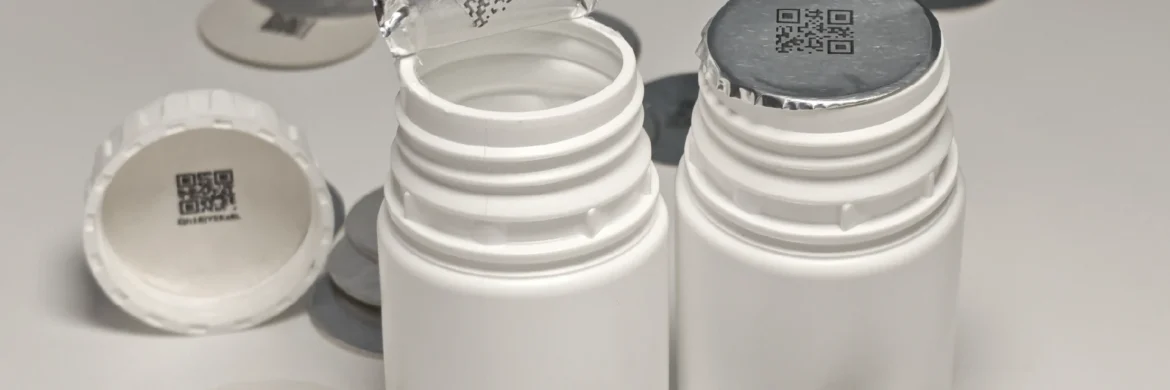
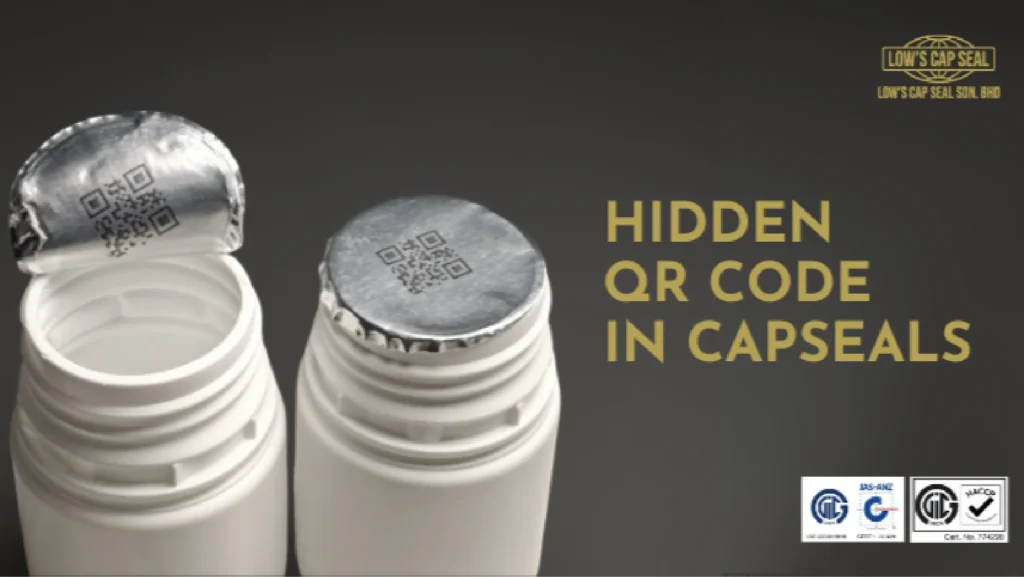
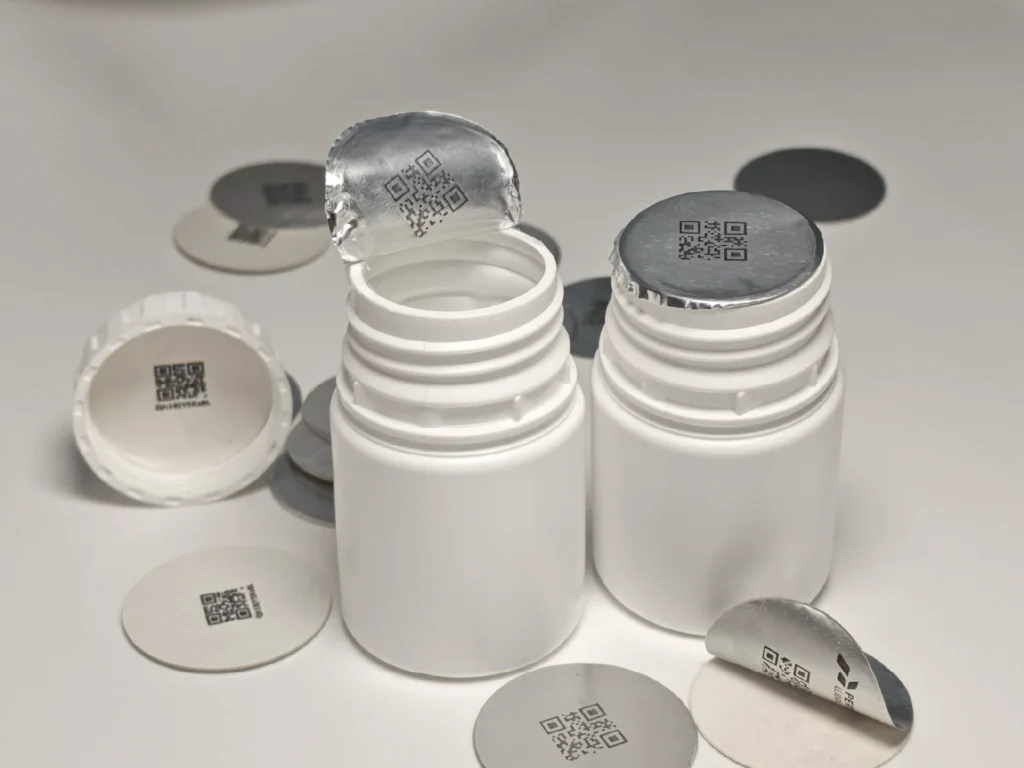
What happens when the QR code is hidden in Capseals?
In the use case of Cap Seal liners, what are the benefits of using such technology? By embedding QR codes with the cap liner, it restricts important information from being viewed normally on the outside packaging and allows customers to scan and authenticate the product. This greatly strengthens the security and validation of the product, which in turn allows customers to avoid being scammed. It also allows better product tracing, which allows manufacturers to keep track and have better control over their products. It also allows better interaction for customers to access such information using QR codes due to its wide adoption with the mass availability to scan it. The addition of QR codes can work in tandem with campaigns to promote products, too. The introduction of QR codes into Cap Seal liners welcomes the benefits of product security alongside brand protection.