
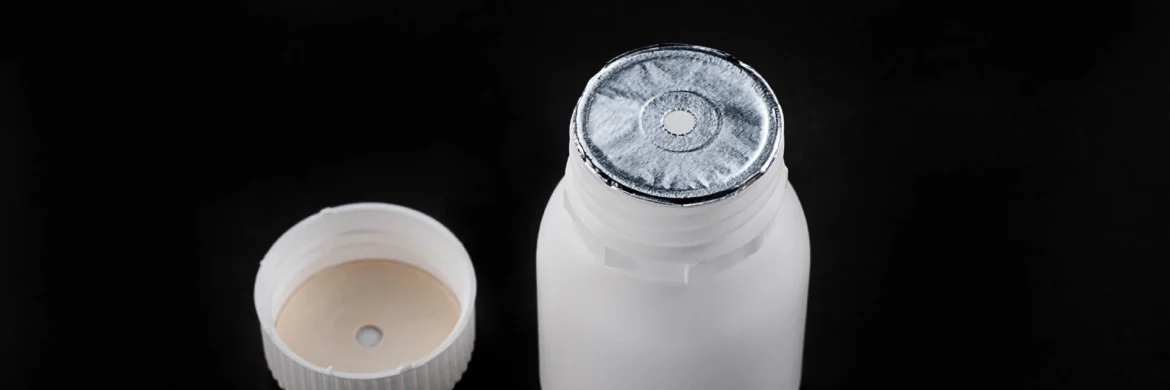
When packaging liquids, chemicals or active ingredients, one of the most common challenges is pressure build-up inside the container.
Temperature changes, altitude differences, or internal reactions can cause bottles to expand, leak, deform, or even explode. leading to costly product loss, poor presentation and reputation.
That’s why manufacturers who value consistency and brand reputation, choose premium vented cap seals — engineered to combine secure induction sealing with controlled air ventilation.
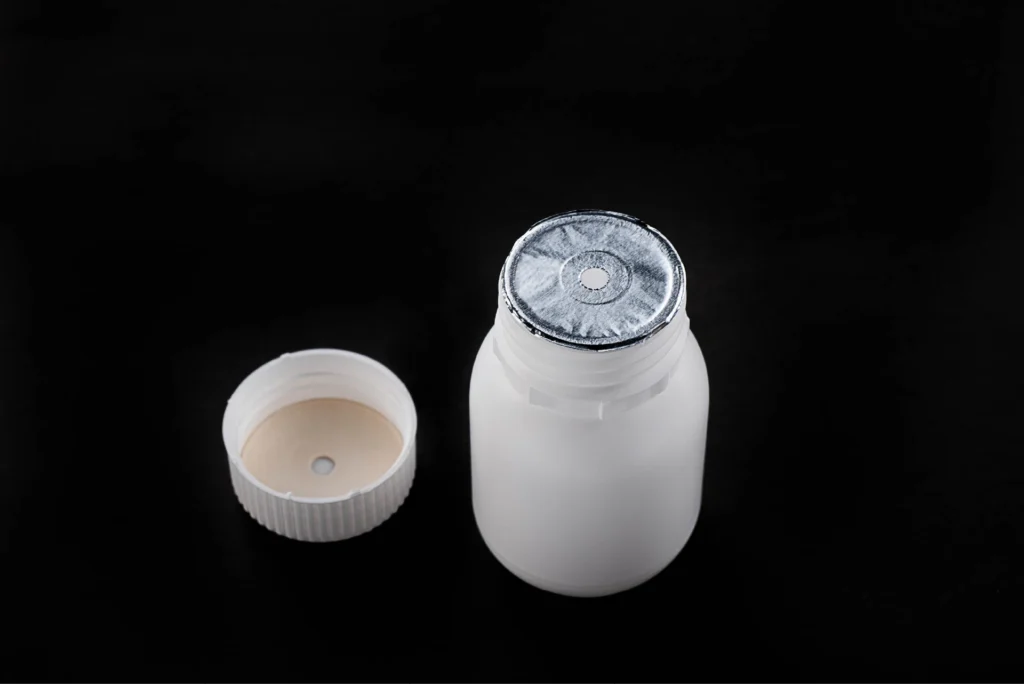
What Is a Vented Cap Seal?
A vented cap seal (also known as a vented induction liner) uses a microporous membrane that allows gases to escape while preventing liquids from leaking.
This keeps containers stable and leak-free, even when internal pressure fluctuates during filling, transport, or storage.
Common applications include:
- Agrochemicals and fertilizers
- Cleaning agents and industrial solutions
- Essential oils and organic acids
- Fermented Food
- Cosmetic and personal care liquids
Our Premium PTFE Vent Membrane Technology
Our vented cap seals use high-grade PTFE membranes, the same material used in Gore-tex technology, laboratory filtration and industrial chemical processing.
Our PTFE offers exceptional chemical resistance, thermal stability, and long-term durability — qualities that lower-cost membranes cannot match.
To prevent liquid blocking our vent, each membrane is treated with a specialized surface coating that provides either hydrophobic or oleophobic properties, depending on the target product:
- Hydrophobic coating: Repels water and moisture; ideal for aqueous liquids.
- Oleophobic coating: Repels oils, solvents, and low surface tension liquids; ideal for solvent- or oil-based formulations.
Most common vented seals on the market do not come with these coatings. When the liquid comes into contact with the vent, it can block the airflow path — preventing proper gas release.
With an airflow rate of 1 L/min, our product vents up to 3× faster than typical products on the market — ensuring better pressure equalization and leak prevention, even during long-distance transport.
How It Works
- Induction sealing: The foil liner bonds tightly to the bottle mouth using electromagnetic induction.
- Venting: A microporous PTFE membrane allows trapped gas to escape while blocking liquid.
- Protection: The membrane surface is coated to repel either water or oil-based liquids, ensuring a clean, dry seal under all conditions.
Why Choose Our Premium Vented Cap Seals
- Chemical-resistant PTFE base — stable under acids, bases, and solvents
- Hydrophobic or oleophobic surface coating — customized for product type
- High venting performance — up to 3× faster airflow for superior stability
- Durable and heat-seal compatible — reliable during induction sealing
- Enhanced product protection — prevents bloating, leaks, and deformation
Every liner is tested for vent rate, seal integrity, and chemical compatibility to ensure stable, high-performance results under real-world conditions.
Contact Us
If your current packaging faces leakage, swelling, or corrosion issues, our premium PTFE vented cap seals provide the reliability and protection your brand deserves.